


Golfer's elbow - Wokingham, Berkshire
On this page
- Overview
- Symptoms
- Causes and risk factors
- Diagnosis
- Golfer's elbow in Chinese medicine
- Acupuncture for golfer's elbow
- Cupping therapy for golfer's elbow
- Moxibustion and heat therapy for golfer's elbow
- Self-care
- Treatment at my clinic
- Frequently asked questions
- References
1. Overview
Golfer’s elbow — medically known as medial epicondylitis or medial epicondylalgia — is a painful overuse condition affecting the common flexor tendon origin at the medial epicondyle (the bony bump on the inside of the elbow). It arises from repetitive stress and micro-tearing of the tendons that attach the forearm flexor and pronator muscles to the inner elbow, causing pain, tenderness and weakness that typically radiates from the medial epicondyle down the inner forearm and into the wrist and hand.
Despite its name, golfer’s elbow is not confined to golfers — it is common in any activity involving repetitive gripping, wrist flexion, or forearm pronation, including racket sports, manual trades, weightlifting, gardening, typing and assembly work. It affects approximately 1–3% of the adult population and is closely related to tennis elbow (lateral epicondylitis), which occurs on the outer elbow and is more common. Both conditions involve tendinopathy at the elbow and respond well to acupuncture, which reduces inflammation in the tendon, relieves pain, restores grip strength and supports tendon healing without the side effects of corticosteroid injections or the recovery demands of surgery.
2. Symptoms
The characteristic feature of golfer’s elbow is pain and tenderness on the inside of the elbow, in contrast to tennis elbow which produces pain on the outside. Symptoms include:
- Pain and tenderness at the medial epicondyle — a localised aching or sharp pain directly over the bony prominence on the inside of the elbow, typically tender to touch. This is the hallmark sign that distinguishes golfer’s elbow from other elbow conditions
- Pain radiating into the forearm and wrist — the pain frequently spreads along the inner forearm towards the wrist and, in some cases, into the hand and fingers (particularly the ring and little fingers), reflecting the distribution of the flexor muscle group and, in some cases, involvement of the adjacent ulnar nerve
- Weakness of grip — difficulty gripping firmly, turning a door handle, shaking hands, carrying bags or swinging a club or racket. Grip weakness can be both painful and mechanically compromised due to the tendon damage
- Pain aggravated by specific movements — wrist flexion against resistance (bending the wrist towards the forearm), forearm pronation (rotating the palm downward), and firm gripping are the most reliable pain-provoking movements. These are the motions that load the common flexor origin
- Stiffness and restricted elbow movement — morning stiffness or stiffness after periods of rest is common, particularly in chronic cases where the tendon has undergone degenerative change (tendinosis)
- Numbness or tingling in the ring and little fingers — in some cases, the ulnar nerve (which passes close to the medial epicondyle) becomes irritated or compressed, producing tingling, numbness or a “funny bone” sensation in the ring and little fingers. This indicates ulnar nerve involvement alongside the tendinopathy
3. Causes and risk factors
Golfer’s elbow develops when the common flexor tendon origin is subjected to repetitive tensile loading that exceeds the tendon’s capacity for repair and recovery, leading to micro-tearing, an inadequate inflammatory response and, in chronic cases, degenerative tendinosis rather than true inflammation. The key risk factors and causes include:
- Repetitive forearm and wrist movements — any activity requiring repeated wrist flexion, forearm pronation, or gripping can cause golfer’s elbow, including golf (particularly the downswing), racket sports, throwing sports, rock climbing, weightlifting, manual trades (carpentry, plumbing, use of hand tools), keyboard and mouse work and assembly line work
- Sudden increase in training load — dramatically increasing the frequency, duration or intensity of a repetitive activity — starting a new sport, returning to activity after a break or significantly increasing training volume — is a common trigger for acute golfer’s elbow
- Poor technique — incorrect grip, swing technique, or tool use that places excessive load on the medial elbow can precipitate or perpetuate golfer’s elbow even at lower training volumes. This is particularly relevant in golf and racket sports
- Inadequate rest and recovery — insufficient recovery time between repetitive activities allows micro-damage to accumulate faster than the tendon can repair it, driving the condition from acute to chronic tendinopathy
- Age and tendon degeneration — tendon quality naturally declines with age, with reduced collagen production, slower repair capacity and altered tendon composition. Golfer’s elbow is most common in adults aged 40–60 for this reason
- Obesity and metabolic factors — metabolic conditions including diabetes, hypercholesterolaemia and obesity are associated with higher rates of tendinopathy, likely through effects on tendon vascularity and collagen quality
- Previous elbow injury — a prior history of elbow injury, fracture or medial collateral ligament damage increases the susceptibility of the common flexor origin to overuse injury
4. Diagnosis
Golfer’s elbow is a clinical diagnosis based on the characteristic history and physical examination findings. Investigations are used to confirm the diagnosis or exclude other conditions:
- Clinical examination — tenderness directly over the medial epicondyle and pain reproduced by resisted wrist flexion and forearm pronation are the hallmarks. The “golfer’s elbow test” (pain at the medial epicondyle when the wrist is flexed against resistance with the elbow extended) is the most reliable clinical test. Grip strength is often measurably reduced on the affected side
- Ultrasound scan — diagnostic ultrasound can confirm tendinopathic changes in the common flexor origin (hypoechoic thickening, tendon irregularity, loss of the normal fibrillar pattern) and assess whether there is calcification, a partial tear or ulnar nerve involvement. It can also guide treatment planning and assess structural changes after treatment. Acupuncture has been shown in RCTs for epicondylitis to reduce common extensor tendon thickness on ultrasound, indicating genuine structural improvement
- MRI — reserved for complex or refractory cases, or where a partial or complete common flexor tendon tear is suspected. MRI provides the most detailed assessment of tendon integrity and adjacent structures
- Nerve conduction studies — if ulnar nerve involvement is suspected (numbness/tingling in ring and little fingers, night symptoms), nerve conduction studies can assess the degree of ulnar nerve dysfunction at the cubital tunnel
5. Golfer's elbow in Chinese medicine
In traditional Chinese medicine (TCM), golfer’s elbow is understood as a form of Bi (obstruction) syndrome localised to the medial elbow, arising from obstruction of Qi and Blood flow through the Heart, Pericardium and Lung channels, which traverse the inner arm and forearm. The medial epicondyle corresponds to a region through which these Yin channels of the arm pass. The clinical presentation — and therefore the most effective treatment approach — depends on the underlying TCM pattern:
- Qi and Blood stagnation — the most common pattern, arising from repetitive overuse, microtrauma and insufficient recovery. The repeated strain disrupts the free flow of Qi and Blood through the medial elbow channels, producing localised stagnation that manifests as fixed pain, tenderness, swelling and restricted movement. Pain is typically described as aching or stabbing, worse with activity and aggravated by pressure. Treatment moves Qi and Blood, breaks up stagnation and promotes tendon healing
- Wind-Cold-Damp Bi (Cold pattern) — seen in patients whose golfer’s elbow is aggravated by cold or damp conditions, often in those who work outdoors in cold environments, frequently wash hands in cold water or whose symptoms are worse in winter or damp weather. Cold causes the channels to contract and Qi and Blood to stagnate. The pain is typically a fixed, deep aching that improves with warmth. Moxibustion and warm needling are particularly effective for this pattern
- Liver and Kidney deficiency with tendon undernourishment — in older patients and those with chronic golfer’s elbow that has failed to respond to rest, the underlying pattern often involves Liver Blood and Kidney Jing deficiency. In TCM, the Liver governs the tendons and Kidney governs the bones; deficiency of either leaves the tendons inadequately nourished and more vulnerable to degeneration and slow recovery. This pattern is associated with chronic tendinosis rather than acute tendinopathy, and requires a combined approach of moving local stagnation while tonifying systemic deficiency
- Damp-Heat accumulation — seen in the acute inflammatory stage, particularly in patients with underlying metabolic conditions. Characterised by heat, redness or warmth at the medial elbow, swelling and a burning quality to the pain. Treatment clears Heat and Damp and reduces inflammation
6. Acupuncture for golfer's elbow
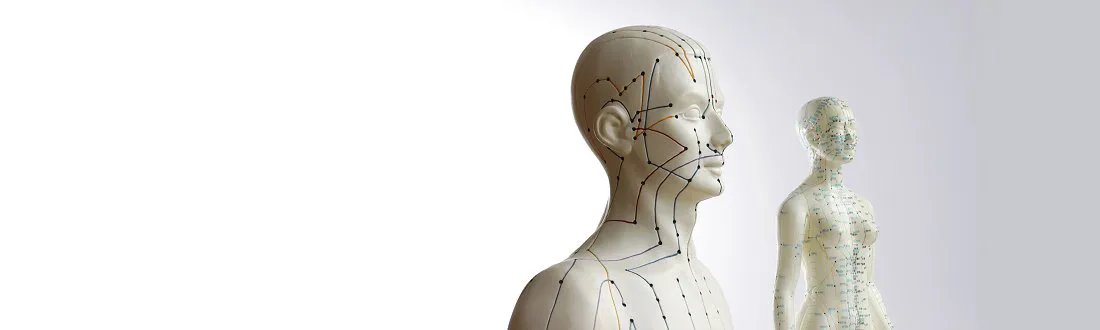
Acupuncture is very effective for golfer’s elbow. It directly reduces inflammation and tendinopathic change in the common flexor tendon, relieves pain, restores grip strength and supports the tendon’s capacity for repair. While most published research uses lateral epicondylitis (tennis elbow) as the primary study condition, golfer’s elbow shares essentially identical pathophysiology — tendinopathy at the humeral epicondyle from repetitive overuse — and responds to the same acupuncture mechanisms and treatment approach, with the needling focus on the medial rather than lateral elbow.
Acupuncture for golfer’s elbow works by:
- Stimulating local acupoints at and around the medial epicondyle to reduce tendon inflammation, improve local blood circulation and promote collagen synthesis and tendon repair
- Releasing myofascial trigger points in the forearm flexor muscles (flexor carpi radialis, flexor carpi ulnaris, pronator teres, palmaris longus) that contribute to the ongoing load on the medial epicondyle and maintain the pain cycle
- Modulating pain signals in the brain and spinal cord through the release of endogenous opioids, serotonin and adenosine, reducing both local pain sensitivity and central pain amplification
- Improving tendon structural integrity — RCTs in epicondylitis have shown acupuncture reduces tendon thickness on ultrasound, indicating genuine structural improvement rather than symptom suppression alone
- Restoring grip strength and forearm function by relieving the protective muscular guarding and splinting that chronic elbow pain produces
Key acupuncture points used for golfer’s elbow include local points at the medial epicondyle and along the common flexor tendon (including HT3/Shaohai and PC3/Quze at the elbow crease), Ashi (tender trigger) points in the forearm flexors, and distal points including PC7, LU7 and HT7 to open the medial arm channels. Electroacupuncture is particularly useful for chronic tendinopathy, delivering sustained stimulation that promotes tendon repair and provides stronger analgesia than manual needling alone.
Research evidence
A randomised controlled trial by Fink et al. (2002), published in Rheumatology, found that real acupuncture at specifically selected points was significantly superior to sham acupuncture for chronic epicondylitis, producing significant reductions in pain intensity and improvements in arm function and grip strength, with benefits maintained at two-month follow-up. A systematic review and meta-analysis by Zhou et al. (2020), published in Pain Research and Management, included 10 RCTs with 796 patients and found acupuncture or electroacupuncture significantly outperformed medicine therapy (P = 0.02) and blocking/injection therapy (P = 0.0001) for epicondylitis, and also outperformed sham acupuncture. A systematic review by Tang et al. (2015), published in Evidence-Based Complementary and Alternative Medicine, found that acupuncture and acupuncture combined with moxibustion improved elbow functional status and muscle strength in lateral epicondylitis RCTs, with the combination particularly effective.
Watch the video below which explains how acupuncture relieves pain:
7. Cupping therapy for golfer's elbow
Cupping therapy is a valuable adjunct to acupuncture for golfer’s elbow, particularly where significant muscular tightness in the forearm flexor group is maintaining the load on the medial epicondyle. The suction created by cups placed over the inner forearm lifts and stretches the soft tissue, releasing deep muscular adhesions, improving blood flow to the tendon insertion area and reducing the chronic tension that perpetuates the condition. Sliding cupping along the belly of the forearm flexor muscles (from elbow to wrist) is particularly effective for releasing widespread fascial and muscular restriction. The combination of cupping to release the forearm musculature followed by acupuncture at the tendon origin produces a more thorough treatment effect than either therapy alone, and patients often notice an immediate improvement in forearm freedom and reduced elbow tenderness after combined treatment.
8. Moxibustion and heat therapy for golfer's elbow
Moxibustion is used for golfer’s elbow with a Cold-Damp or Cold Bi pattern, where the application of sustained warmth to the medial elbow disperses Cold pathogenic factors, improves local circulation, promotes tendon extensibility and reduces the contracted, tight quality of the tissue that makes the elbow painful. Warm needle acupuncture — in which moxa is burned on the handle of the needle already inserted at the medial epicondyle — combines the penetrating warmth of moxibustion with the local needling stimulus, providing a particularly effective treatment for Cold pattern presentations.
Heat therapy with an infrared TDP lamp directed at the medial elbow during the acupuncture session provides sustained deep warmth that relaxes the forearm flexors, improves circulation to the tendon insertion and reduces the muscular splinting that chronic elbow pain produces. Many patients find the combination of infrared heat, acupuncture and cupping produces significantly more lasting pain relief than acupuncture alone, particularly for Cold or chronic presentations.
9. Self-care
Self-care plays an important role in supporting acupuncture treatment and preventing recurrence of golfer’s elbow:
- Activity modification and relative rest — the single most important immediate step is reducing or temporarily stopping the activity causing the overuse. This does not mean complete immobilisation — gentle movement within the pain-free range maintains circulation and prevents stiffness — but activities that load the flexor origin should be substantially reduced during active treatment. For golfers and racket sport players, a temporary break from play combined with technique review on return is strongly recommended
- Forearm flexor stretching — gentle stretching of the forearm flexor muscles by extending the wrist and fingers with the elbow straight (the opposite motion to that which aggravates the condition) helps maintain tendon extensibility, reduces muscular tension on the medial epicondyle and supports recovery. Hold for 30 seconds and repeat several times daily, staying within a comfortable stretch
- Eccentric strengthening exercises — once the acute pain settles, graduated eccentric strengthening of the wrist flexors (slowly resisting wrist extension through range) is the most evidence-supported exercise approach for tendinopathy rehabilitation and helps rebuild tendon load capacity to prevent recurrence. These are best learned from a physiotherapist or at the clinic
- Heat application — applying a warm heat pad or hot water bottle to the inner elbow and forearm for 15–20 minutes before exercise or activity reduces pain, loosens the flexor muscles and reduces the risk of re-aggravation. Avoid ice/cold application for non-acute presentations, as cold worsens Cold-Damp patterns and can increase tendon stiffness
- Counterforce bracing — a medial elbow strap or counterforce brace worn during aggravating activities reduces the strain transmitted to the medial epicondyle by altering the mechanical load on the common flexor origin. It is useful as a short-term adjunct during return to activity but should not replace rehabilitation
- Ergonomic review — for those whose golfer’s elbow is occupational, reviewing workstation setup (keyboard height, mouse grip, hand tool weight and grip) to reduce sustained forearm pronation and wrist flexion loading can significantly reduce recurrence risk. For racket sport players, checking grip size and racket string tension with a coach is worthwhile
- Avoid steroid injections where possible — while corticosteroid injections may provide short-term pain relief, they have been shown to weaken tendon collagen and increase the long-term risk of tendon rupture and recurrence. Acupuncture provides meaningful pain relief with a much better long-term structural outcome for the tendon
10. Treatment at my clinic
I treat golfer’s elbow at my clinic in Wokingham, Berkshire, using a combination of acupuncture, electroacupuncture, cupping therapy, moxibustion and heat therapy tailored to the individual’s presentation and TCM pattern. Most patients with golfer’s elbow notice meaningful pain reduction and improved grip strength within four to six sessions, with progressive improvement over a course of six to ten treatments.
Early treatment in the acute stage produces the fastest results. Chronic golfer’s elbow that has been present for more than six months, or that has been treated with multiple steroid injections, may require a longer course. Acupuncture works well alongside physiotherapy rehabilitation, and the combination of acupuncture to reduce pain and inflammation with eccentric loading exercises to rebuild tendon strength produces the most comprehensive and durable recovery. For an overview of all pain conditions treated, visit the pain page, and see the prices page for treatment costs.
11. Frequently asked questions
How is golfer's elbow different from tennis elbow?
Both are overuse tendinopathies at the elbow, but they affect different sides. Golfer’s elbow (medial epicondylitis) involves the common flexor tendon on the inside of the elbow, causing inner elbow pain that radiates down the forearm. Tennis elbow (lateral epicondylitis) affects the common extensor tendon on the outside of the elbow. Both respond well to acupuncture. The movements that aggravate them differ: gripping and wrist flexion/pronation for golfer’s elbow; gripping and wrist extension for tennis elbow.
How quickly does acupuncture work for golfer's elbow?
Most patients notice meaningful pain reduction within three to five sessions of acupuncture. Grip strength improvement tends to follow pain relief, usually by the fourth to sixth session. Acute golfer’s elbow of less than three months’ duration responds most quickly; chronic tendinosis of more than six months’ duration typically requires a longer course and consistent rehabilitation exercise between sessions.
How many sessions are needed for golfer's elbow?
A typical course for golfer’s elbow is six to ten weekly sessions. Acute presentations may resolve with four to six sessions; chronic or recurrent golfer’s elbow, or presentations in older patients with underlying tendon degeneration, generally requires eight to twelve sessions. Maintenance treatment every four to six weeks helps prevent recurrence in those who cannot modify the aggravating activity.
Can acupuncture help golfer's elbow that has not responded to physiotherapy or steroid injections?
Yes. Acupuncture works through different mechanisms from physiotherapy exercise and steroid injections, and many patients who have had limited benefit from these approaches find acupuncture produces significant improvement. This is particularly true for chronic tendinosis, where the degenerative tendon tissue does not respond well to steroid injection (which can further weaken the tendon) but does respond to the pro-healing stimulation of acupuncture needling at the tendon origin.
Should I avoid using my arm while having acupuncture for golfer's elbow?
Complete rest is not recommended and may slow recovery by reducing the mechanical stimulus that tendons need to maintain structural integrity. Relative rest — significantly reducing the aggravating activity while maintaining gentle everyday use — is the correct approach. Between acupuncture sessions, gentle forearm stretching and, once the acute pain settles, graduated eccentric strengthening exercises support recovery and help prevent recurrence. Returning to the full aggravating activity should be gradual and guided by symptom response.















