


Tennis elbow - Wokingham, Berkshire
On this page
- Overview
- Symptoms
- Causes
- Tennis elbow in Chinese medicine
- Acupuncture for tennis elbow
- Cupping therapy for tennis elbow
- Moxibustion for tennis elbow
- Chinese herbal medicine for tennis elbow
- Self-care tips
- Treatment at my clinic
- Frequently asked questions
- References
1. Overview
Tennis elbow (lateral epicondylitis) is a painful overuse condition caused by strain to the muscles and tendons of the forearm where they attach to the lateral epicondyle — the bony prominence on the outer side of the elbow. It is called tennis elbow because it is common in tennis players who develop it from gripping and repeatedly loading the racket, but it can affect anyone whose work or activities involve repetitive gripping, lifting or forearm rotation. It affects 1–3% of adults in the general population, with 16% reporting work restriction due to pain and functional impairment.
Conventional treatment generally includes anti-inflammatory medication, steroid injections and ice packs to reduce inflammation in the early stages. Physiotherapy — which often focuses on stretching and strengthening exercises — can sometimes make the condition worse during the acute phase by further loading already-inflamed and degenerative tendon tissue. Acupuncture is very effective at treating tennis elbow, reducing inflammation and relieving pain. Specific acupuncture points are used to reduce inflammation and pain in the forearm muscles and increase blood flow, thereby accelerating the rate of healing. Traditional Chinese medicine (TCM) has been shown in research studies to reduce the long-term pain of tennis elbow as well as pain and inflammation. A systematic review and meta-analysis of 10 RCTs involving 796 individuals confirmed that acupuncture significantly outperformed medicine therapy and blocking (steroid injection) therapy for both clinical efficacy rate and VAS pain reduction in lateral epicondylitis.
2. Symptoms
Tennis elbow produces a characteristic pattern of pain and functional impairment centred on the lateral elbow:
- Lateral elbow pain — pain at the lateral epicondyle of the humerus, at the origin of the common extensor tendon; the pain is typically described as aching or burning at rest, with sharp pain triggered by activity; it is most pronounced on the outer (lateral) aspect of the elbow and may radiate down the outer forearm toward the wrist; point tenderness on palpation of the lateral epicondyle is the most consistent clinical finding
- Weakness of grip and hand strength — the tendinous inflammation at the lateral epicondyle directly impairs the function of the extensor muscles of the forearm, reducing grip strength; daily activities requiring gripping — shaking hands, opening jars, lifting a kettle, carrying shopping, using tools — are typically painful and may be impossible during a severe flare
- Pain on resisted wrist extension — the classic clinical test for tennis elbow; attempting to extend the wrist against resistance reproduces the characteristic lateral elbow pain by loading the extensor carpi radialis brevis (ECRB) tendon at its attachment to the lateral epicondyle; this is the basis of the Cozen test used in clinical diagnosis
- Worsening with gripping activities — any activity requiring a sustained or repeated forearm grip worsens symptoms; turning a screwdriver, typing, mousing, racket sports, weightlifting and housework with sustained gripping are among the most common aggravating activities
- Morning stiffness and stiffness after rest — the elbow and forearm often feel stiff and painful after prolonged rest, such as on waking; this reflects the degenerative changes in the tendon (tendinosis) that characterise chronic tennis elbow and is similar to the stiffness seen in other tendinopathies
- Chronicity and impact on daily life — tennis elbow frequently becomes chronic if inadequately treated; symptoms can persist for 6 months to 2 years in some cases, significantly restricting work, sport and daily function; the longer the condition has been present, the more the tendon tissue has undergone degenerative change (tendinosis) rather than simple inflammation, making prompt and appropriate treatment important
3. Causes
Tennis elbow is caused by repetitive overloading of the extensor muscle-tendon unit of the forearm, particularly the extensor carpi radialis brevis (ECRB) tendon at its origin on the lateral epicondyle:
- Repetitive gripping and forearm strain — the primary cause; repeated contraction of the wrist extensor muscles under load creates cumulative microtrauma at the ECRB tendon-bone junction; this is the mechanism in tennis players (holding the racket, backhand strokes), manual workers, painters, plumbers, carpenters, butchers, kitchen workers and office workers who use a mouse for many hours daily
- Racket sports and overhead sports — tennis, badminton, squash and racquetball are classically associated with lateral epicondylitis; the backhand stroke in tennis is the most commonly implicated movement, particularly with heavy rackets, inappropriate string tension or poor technique; golfers can also develop lateral epicondylitis from the leading-arm grip
- Occupational overuse — work involving repeated and forceful gripping, forearm rotation (supination and pronation), lifting with the palm facing down or typing and mousing for sustained periods; desk-based workers with poor ergonomics are increasingly presenting with tennis elbow from prolonged mouse use
- Sudden increase in activity or loading — a sudden increase in the volume, intensity or duration of activities loading the forearm — such as decorating, gardening, DIY or starting a new sport — without adequate conditioning or warm-up; the tendon tissue has insufficient time to adapt to the increased mechanical demand
- Poor technique or equipment — in sport, inappropriate technique (particularly in the backhand), overly heavy rackets, incorrect grip size or poorly strung rackets increase the loading on the lateral elbow; correction of technique and equipment is an important part of prevention and management
- Age-related tendon degeneration — tennis elbow most commonly affects people aged 35–55; in this age group, age-related changes in tendon collagen composition and reduced blood supply make the ECRB tendon more susceptible to microtear and the degenerative tendinosis changes of established lateral epicondylitis; in TCM, this reflects progressive Kidney deficiency and Liver Blood insufficiency reducing the constitutional nourishment of the sinews and tendons
4. Tennis elbow in Chinese medicine
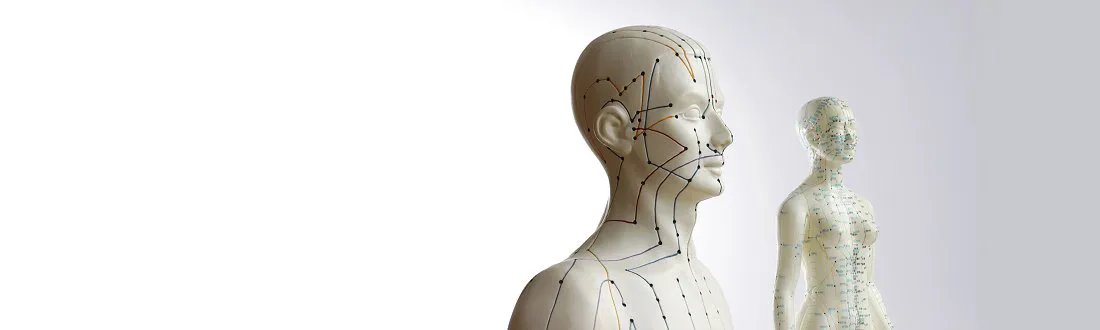
In traditional Chinese medicine, tennis elbow is understood as an injury of the sinews and tendons in the Large Intestine and San Jiao (Triple Warmer) channels of the forearm. The lateral epicondyle corresponds anatomically to the region of LI10 (Shousanli) and LI11 (Quchi) on the Large Intestine channel, and the extensor tendons of the forearm run along the San Jiao channel pathway. Obstruction of Qi and Blood in these channels produces the characteristic pain, stiffness and weakness of tennis elbow. The main TCM patterns are:
- Qi and Blood stagnation in the Large Intestine and San Jiao channels (acute tendinitis pattern) — the dominant pattern in acute tennis elbow; repetitive overloading of the forearm channels causes Qi and Blood to stagnate at the lateral epicondyle, producing the classic signs of acute tendinitis — pain that is sharp on loading, local tenderness, reduced grip strength and restricted movement; the acute inflammatory phase corresponds directly to local Qi-Blood obstruction. Treatment moves Qi and Blood, reduces local stagnation and opens the channel collaterals using local points (LI11/Quchi, LI10/Shousanli, LI4/Hegu) and distal points (LI3, SJ5/Waiguan)
- Wind-Cold-Damp invasion (chronic aching pattern) — in many chronic tennis elbow cases, external Cold and Damp have invaded the weakened channel, adding a Wind-Cold-Damp obstruction pattern to the underlying Blood stagnation; the pain is heavier, more aching, worsened by cold and damp weather, and relieved by warmth; the forearm and elbow feel stiff and sluggish. Treatment expels Wind-Cold-Damp, warms the channel and moves Blood stagnation, using warm needle moxibustion at local points
- Liver governing the sinews — Blood and Yin deficiency (chronic tendinosis/degenerative pattern) — the pattern in long-standing, chronic tennis elbow, particularly in middle-aged patients; the Liver governs all sinews and tendons throughout the body; when Liver Blood and Yin are deficient — a common constitutional pattern in the 35–55 age group — the sinews and tendons are inadequately nourished, making them tight, prone to degeneration and slow to repair; this produces the dry, degenerative tendinosis changes that characterise chronic tennis elbow; the condition is slow to heal and recurs easily because the sinews remain undernourished. Treatment nourishes Liver Blood and Yin, strengthens the sinews and supports tendon repair alongside direct channel treatment
- Kidney deficiency with sinew malnourishment (age-related degeneration) — the constitutional background in older patients; the Kidney governs the bones and provides the constitutional foundation for sinew health; when Kidney Qi declines with age, the sinews and tendons at tendinous attachments to bone (such as the ECRB at the lateral epicondyle) become more vulnerable to degenerative change; treatment tonifies Kidney Qi and supplements the bone-sinew connection alongside nourishing Liver Blood
5. Acupuncture for tennis elbow
Traditional acupuncture is very effective at treating tennis elbow and reducing inflammation and pain. Specific acupuncture points are used to reduce inflammation and pain in the forearm muscles and increase blood flow, thereby accelerating the rate of healing. Key acupoints for lateral epicondylitis include LI11 (Quchi) and LI10 (Shousanli) on the lateral forearm directly over the affected tendons, combined with distal points such as LI4 (Hegu) and SJ5 (Waiguan) to open the channels throughout their length. Acupuncture treats tennis elbow through the following mechanisms:
- Reducing local inflammation at the tendon insertion — acupuncture reduces the local inflammatory mediators — prostaglandins, substance P and pro-inflammatory cytokines — at the lateral epicondyle and ECRB tendon origin; this anti-inflammatory action is particularly important in the acute phase and directly addresses the tendinitis component of tennis elbow
- Promoting tendon tissue repair — acupuncture stimulates the production of transforming growth factor-β1 (TGF-β1), basic fibroblast growth factor (b-FGF) and other growth factors that drive collagen synthesis and fibroblast proliferation; these signals promote the repair of the degenerative tendon tissue (tendinosis) that underlies chronic tennis elbow and which anti-inflammatory medication alone cannot address
- Increasing blood flow to the tendon insertion — tendons have a relatively poor blood supply, and the ECRB tendon at the lateral epicondyle is particularly avascular; acupuncture improves local microcirculation, delivering the oxygen and nutrients needed for tendon repair and accelerating the rate of healing — a clinically important advantage over treatments that suppress inflammation without supporting repair
- Releasing myofascial trigger points in the forearm extensors — the extensor carpi radialis brevis, extensor carpi radialis longus and extensor digitorum contain myofascial trigger points in chronic tennis elbow that maintain the neural tension driving pain at the lateral epicondyle; deep needling of these trigger points directly releases the muscle tension, reduces referred pain patterns along the forearm and restores normal muscle length and function
- Stimulating endorphin-mediated analgesia — acupuncture activates the body’s endogenous pain-control system, raising the pain threshold and providing effective analgesia for the often-persistent pain of chronic tennis elbow without the gastrointestinal and systemic side effects of NSAIDs
- Improving grip strength and functional recovery — by reducing pain, releasing muscle tension and promoting tendon repair, acupuncture restores grip strength and forearm function; research confirms significant improvement in both elbow functional status and myodynamia (muscle strength) with acupuncture treatment
Research evidence
A systematic review and meta-analysis by Zhou et al. (2022), published in Pain Research and Management, included 10 RCTs involving 796 individuals from 7 databases; acupuncture significantly outperformed medicine therapy (P=0.02) and blocking/steroid injection therapy (P=0.0001) for clinical efficacy rate, and outperformed medicine therapy (P<0.00001) and blocking therapy (P=0.03) for VAS pain reduction in lateral epicondylitis. A systematic review and meta-analysis by Navarro-Santana et al. (2021) found a moderate effect size for acupuncture in reducing elbow pain (SMD=−0.66; 95% CI: −1.22 to −0.10), a significant moderate effect in improving related disability (SMD=−0.51; 95% CI: −0.91 to −0.11) and a significant effect on strength. A systematic review by Tang et al. (2015), searching 7 databases and including 4 RCTs with 309 participants, found that acupuncture combined with moxibustion significantly improved elbow functional status and myodynamia compared to blocking therapy alone.
6. Cupping therapy for tennis elbow
Cupping therapy is an effective complementary treatment for tennis elbow, particularly for the myofascial component of the condition. It is frequently combined with acupuncture in the same session. Cupping treats tennis elbow by:
- Releasing tight forearm extensor muscles — the suction effect of cupping decompresses the forearm extensor muscles and fascia, releasing the chronic tension in the extensor carpi radialis and extensor digitorum muscles that maintains the loading on the lateral epicondyle; by releasing the muscle belly, cupping reduces the tensile load transmitted to the tendon attachment and directly relieves the strain causing pain at the lateral epicondyle
- Moving Blood stagnation in the channel — cupping powerfully moves Qi and Blood through the Large Intestine and San Jiao channels of the forearm, dispersing the local Blood stagnation that maintains the chronic pain pattern of tennis elbow; the characteristic red marks (sha) left by cupping are a direct indication of the Blood stagnation being moved from the local channels
- Reducing myofascial adhesions — in chronic tennis elbow, the forearm muscles and fascial layers develop adhesions that restrict tissue gliding and perpetuate pain; cupping separates these fascial layers, improving tissue mobility and reducing the referred pain from forearm trigger points to the lateral elbow
- Improving local circulation — like acupuncture, cupping improves local microcirculation at the treatment site; for the relatively avascular lateral epicondyle and ECRB tendon, this improved blood supply supports tendon repair and speeds recovery
7. Moxibustion for tennis elbow
Moxibustion is particularly beneficial for chronic tennis elbow with cold-sensitive pain or the Wind-Cold-Damp invasion pattern, where warmth clearly relieves symptoms. Warm needle moxibustion — in which moxa is burned on the handle of the acupuncture needle at LI11 (Quchi) and LI10 (Shousanli) — directly warms the lateral elbow and forearm channels, expelling Cold from the tendon and improving circulation to the avascular tendon tissue. The systematic review by Tang et al. (2015) found that acupuncture combined with moxibustion with material insulation was more effective than blocking therapy for improving elbow functional status and myodynamia in lateral epicondylitis. Ginger moxibustion at the lateral epicondyle site has classical clinical evidence for tendon conditions with Cold invasion. Heat therapy can be combined with moxibustion for additional benefit.
8. Chinese herbal medicine for tennis elbow
Chinese herbal medicine provides systemic daily treatment for tennis elbow, addressing the underlying TCM patterns from the inside. Herbal treatment is particularly valuable in chronic and degenerative cases where Liver Blood deficiency and Blood stagnation are driving slow healing and recurrence. Classical formulae used include:
- Juan Bi Tang (Remove Painful Obstruction Decoction) modifications — for Wind-Cold-Damp Bi pattern with aching, cold-worsened lateral elbow pain; expels Wind-Cold-Damp from the channels, warms the sinews and moves Qi and Blood to relieve the obstructed, heavy quality of chronic cold-worsened tennis elbow; contains Qiang Huo (Notopterygium), Du Huo (Angelica pubescens), Qin Jiao (Gentiana macrophylla), Chuan Xiong (Ligusticum chuanxiong), Hai Feng Teng (Piper kadsura), Rou Gui (Cinnamon bark), Ru Xiang (Frankincense), Mu Xiang (Saussurea) and Gan Cao (Licorice)
- Shen Tong Zhu Yu Tang (Drive Out Blood Stasis from a Painful Body) modifications — for pronounced Blood stagnation with fixed, stabbing lateral elbow pain that worsens at night and does not fully improve with rest; strongly moves Blood, resolves stasis and opens the collaterals; contains Qin Jiao, Chuan Xiong, Tao Ren (Prunus persica), Hong Hua (Carthamus), Gan Cao, Qiang Huo, Mo Yao (Myrrh), Dang Gui (Angelica sinensis), Wu Ling Zhi (Trogopterus dung), Xiang Fu (Cyperus), Niu Xi (Achyranthes) and Di Long (Earthworm)
- Du Huo Ji Sheng Wan (Angelica Loranthus Pill) modifications — for chronic tennis elbow with Liver-Kidney deficiency and slow healing in older patients; tonifies Liver and Kidney (to nourish the sinews and strengthen the bone-tendon junction), nourishes Blood, expels Wind-Cold-Damp; the formula most suited to recurrent lateral epicondylitis in patients aged 40+ where constitutional sinew depletion is a significant factor
- Die Da Wan (Traumatology Pill) preparations — for acute or subacute presentations with prominent Blood stagnation and swelling; strongly moves Blood, resolves stasis and reduces swelling; contains San Qi (Notoginseng — the most important single herb for acute Blood stagnation), Dang Gui Wei (Angelica tail), Ru Xiang and Mo Yao; also available as topical liniment (Zheng Gu Shui) for direct application to the lateral elbow
Topical preparations including Zheng Gu Shui liniment and Die Da medicated oil can be applied directly to the lateral epicondyle region for immediate local pain relief between acupuncture sessions. Internal herbs are prescribed as pharmaceutical-grade granules from Sun Ten (Taiwan), dissolved in warm water and taken daily. An online Chinese herbal consultation is available for patients who cannot attend the clinic in person.
9. Self-care tips
The following self-care measures help manage tennis elbow and complement acupuncture treatment:
- Rest and load management — stop holding items intensely and avoid or modify the repetitive gripping activities driving the condition; complete rest is not advisable — pain-free light activity maintains circulation and prevents deconditioning — but any activity that reproduces the lateral elbow pain should be reduced to below the pain threshold to allow tendon healing to progress
- Forearm brace or strap — wearing a counterforce forearm brace or elbow strap just below the lateral epicondyle redistributes the tensile load from the ECRB tendon attachment, reducing the mechanical stress on the injured tendon during activities and significantly reducing pain; this is one of the most effective simple self-care measures for tennis elbow
- Heat therapy — for chronic tennis elbow, applying a warm heat pad or heat therapy to the lateral elbow relaxes the forearm extensor muscles, improves local blood flow to the tendon and reduces the Cold-Damp obstruction contributing to chronic pain; heat is preferable to ice for chronic tendinopathy in TCM, as ice constricts the channels and impairs circulation
- Eccentric wrist extension exercises (when pain allows) — once the acute inflammatory phase has resolved, slow eccentric wrist extension exercises (lowering the wrist slowly against gravity or light resistance) are among the most evidence-based rehabilitation exercises for lateral epicondylitis, promoting tendon collagen remodelling and rebuilding tensile strength; these should be introduced gradually and only when pain-free during the movement
- Ergonomic modification — assess and adjust your workstation, keyboard height and mouse position; use a vertical mouse or trackpad to reduce forearm rotation; for manual work, use tools with larger, padded handles that require less grip force; in racket sports, consider racket weight, string tension and grip size with your coach
- Avoid aggravating activities — avoid or modify activities that clearly worsen symptoms: repetitive strong gripping, turning a screwdriver (particularly with the palm facing down), lifting with a straight arm, backhand strokes without adequate warm-up; give the tendon adequate recovery time between activities that load it
10. Treatment at my clinic
I treat tennis elbow at my clinic in Wokingham, Berkshire. Treatment combines acupuncture, cupping therapy, moxibustion and, where appropriate, Chinese herbal medicine, tailored to the specific TCM pattern — whether acute Blood stagnation, Wind-Cold-Damp invasion, Liver-Kidney deficiency or a combination of these. Both acute and chronic tennis elbow are treated, including long-standing degenerative lateral epicondylitis that has not responded adequately to conventional treatments such as steroid injections or physiotherapy. Related conditions frequently treated alongside tennis elbow include golfer’s elbow, carpal tunnel syndrome, forearm and muscle pain, frozen shoulder and neck pain.
Visit the prices page for treatment costs or book an online Chinese herbal consultation if you cannot attend in person.
11. Frequently asked questions
Can acupuncture help tennis elbow?
Yes — acupuncture is very effective for tennis elbow. A systematic review and meta-analysis of 10 RCTs involving 796 individuals found that acupuncture significantly outperformed medicine therapy (P=0.02) and blocking/steroid injection therapy (P=0.0001) for clinical efficacy rate, and outperformed medicine therapy (P<0.00001) for pain reduction. A second meta-analysis found a moderate effect size for pain reduction (SMD=−0.66) and functional disability improvement (SMD=−0.51). Acupuncture reduces inflammation, promotes tendon tissue repair, improves blood flow to the tendon and releases the forearm muscle tension that drives pain at the lateral epicondyle.
Is acupuncture better than steroid injections for tennis elbow?
The evidence suggests acupuncture is superior to steroid injection (blocking therapy) for tennis elbow in terms of clinical efficacy rate (P=0.0001 in favour of acupuncture) and long-term outcomes. Steroid injections can provide rapid short-term pain relief but have been shown in systematic reviews to have worse long-term outcomes than other treatments, including possible tendon weakening with repeated use. Acupuncture and TCM address both the inflammation and the underlying tendon degeneration, producing more durable results. TCM has been shown to reduce long-term pain of tennis elbow as well as acute pain and inflammation.
What is tennis elbow?
Tennis elbow (lateral epicondylitis) is a painful overuse condition caused by strain to the extensor carpi radialis brevis (ECRB) tendon at its attachment to the lateral epicondyle of the humerus. Despite its name, only 5–10% of people who develop it actually play tennis — it affects anyone who performs repetitive gripping, lifting or forearm-rotating activities. The tendons become inflamed and, in chronic cases, develop degenerative changes (tendinosis) at the point where they join the bony prominence on the outside of the elbow, causing elbow pain and weakness in grip and hand strength.
How many sessions does acupuncture take to help tennis elbow?
For acute tennis elbow, improvement is often noticeable within 3–5 sessions. For chronic lateral epicondylitis that has persisted for months or failed to respond to conventional treatments, a course of 6–10 sessions is typically needed, with progressive improvement over the course of treatment. In the systematic review evidence, treatment courses ranged from a few sessions to several weeks of regular treatment; the best outcomes were associated with more complete courses of treatment rather than single sessions.
What self-care can I do for tennis elbow?
The most important self-care measures are to stop or reduce the repetitive gripping activities causing the condition, wear a forearm counterforce brace or strap to reduce load on the tendon, and apply heat therapy to relax the forearm muscles and improve blood flow to the tendon. Ergonomic assessment of workstation, tools and sporting equipment is important for preventing recurrence. In TCM, warming the channels with heat or moxa directly expels the Cold and Damp that perpetuate chronic tendinitis in the Large Intestine and San Jiao channel pathways.















